
Communications and engagement professionals often face the challenge of managing highly polarised community issues, where economic opportunities clash with environmental and health concerns. This case study explores a strategic communications opportunity for a proposed industrial development planning application that divided a regional community. A fictional regional council, ‘Larejta City Council’, faced a contentious decision about an international company’s proposal to build a light bulb recycling facility. The proposal promised 50 new jobs in a region experiencing economic decline. However, the application raised community concerns about heavy metal emissions and potential health impacts on residents and agricultural land.
The Communications Context:
- Divided community opinion: Strong support from job-seekers versus equally strong opposition from public health and environmental advocates
- Economic transition: A community grappling with the decline of traditional energy industries
- Technical complexity: Public concerns about heavy metal handling and emission monitoring
- Democratic process: Council’s decision contradicted professional planning advice, creating additional messaging challenges
The Engagement Context:
The planning permit exhibition process is driven by statutory processes and is governed by state legislation.
This falls under the ‘inform’ (provide the public with balanced and objective information to assist them in understanding the problem, alternatives, opportunities and/or solutions) and ‘consult’ (obtain public feedback on analysis, alternatives and/or decisions) phases of the International Association of Public Participation (IAP2) Spectrum of Public Participation.
Adjoining landowners and occupiers are notified in writing of a permit application and have a timeframe to make a submission. If the statutory process is followed in a traditional way (public notice in the newspaper and A4 signage at the property), community members falling outside the landholder/occupier scope may or may not learn about the proposal.
The final determination may be made by the responsible authority, usually Council, or the Planning Minister if referred on.
Gold standard engagement may go beyond the statutory notifications to ‘involve’ (work directly with the public throughout the process to ensure that public concerns and aspirations are consistently understood and considered) or ‘collaborate’ (partner with the public in each aspect of the decision including the development of alternatives and the identification of the preferred solution).
A place-based approach for this application may include:
- Pre-application meetings with all affected landholders/occupiers
- 1:1 meetings between the proponent and key stakeholders such as First Peoples, young people, members of the LGBTQIA+ community, people with a disability or people who are culturally or linguistically diverse
- During the exhibition period, hold several public drop-in sessions at various times and locations (farmers markets, community venues or public spaces like a library, school or supermarket)
- Targeted media relations to ensure a wide audience is reached and the content is searchable and shareable
- A public education campaign, spanning the pre-application process and for several weeks during the exhibition period, to ensure transparency, fairness and the opportunity to give people a voice
Case Study Response:
My communications response comes at the end of the public exhibition process. Council voted against the planning permit application, despite Council Planners approving the permit.
Rather than relying on the traditional public exhibition process, I’m recommending the organisation adopt a place-based approach, as outlined above. Going one step further, I also recommend the planning application files are stored in an easy-to-use document library on the organisation’s engagement website, ‘Engage Larejta’.
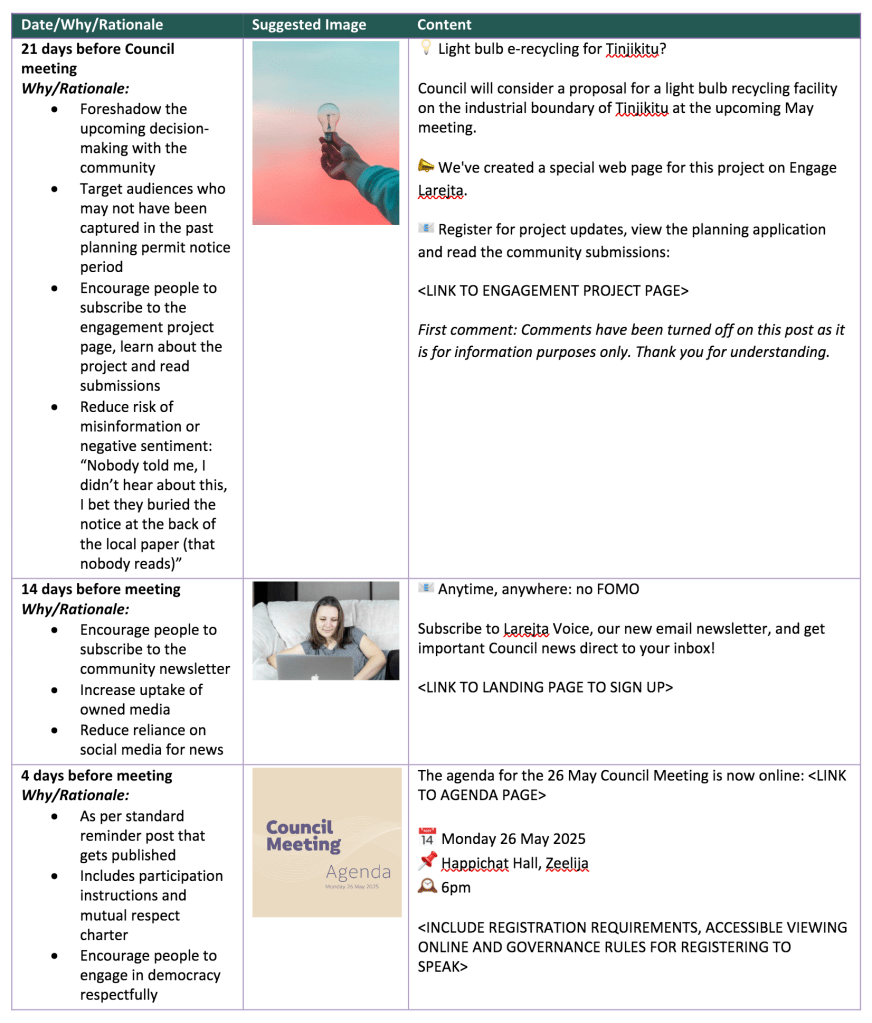
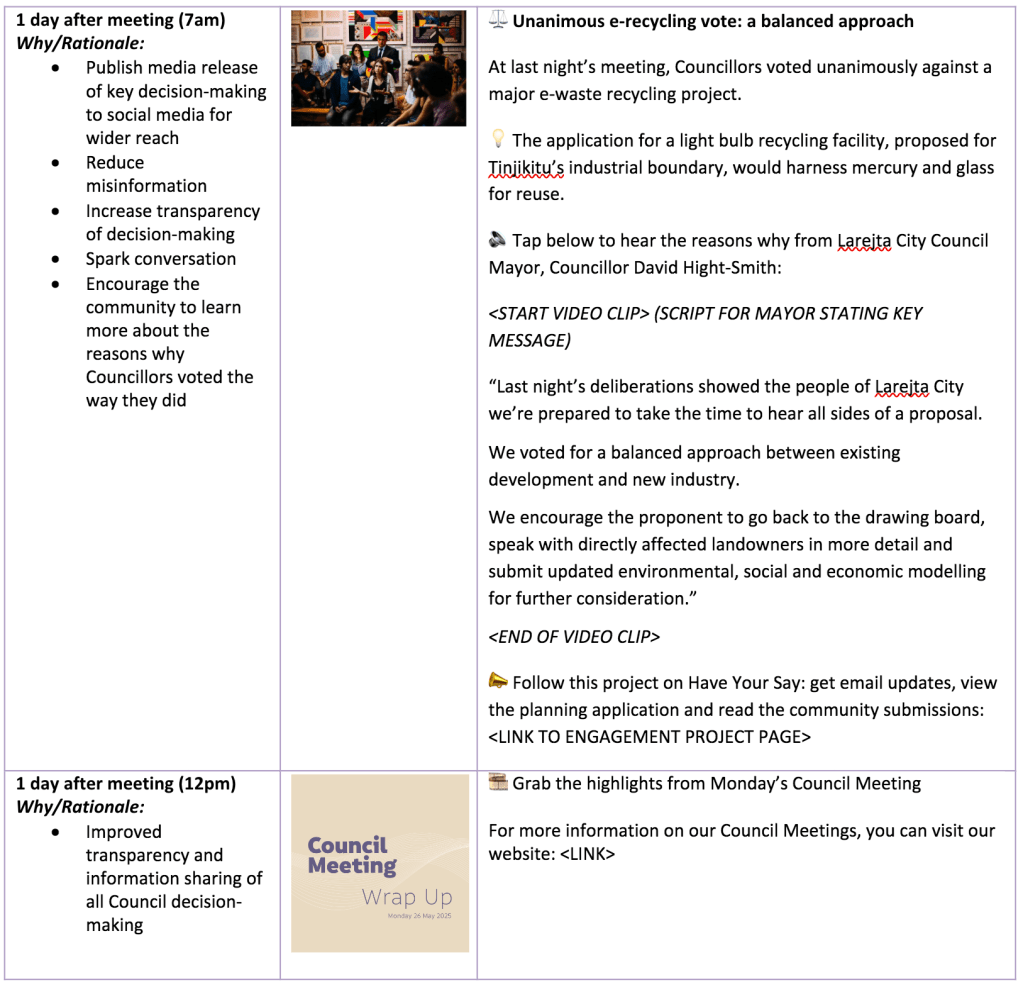
Three weeks before the Council meeting, a social media campaign commences to inform the broader community of the upcoming vote. The foreshadowing of the meeting targets audiences who may not have seen the initial public exhibition notice or materials. This approach aims to reduce misinformation or negative sentiment and encourages people interested in the proposal to sign up to the project page to view the proposal and get email updates.
The communications materials prepared aim to demonstrate transparency in decision-making, acknowledge all community perspectives, maintain Council’s credibility despite rejecting expert planning advice and provide clear next steps for ongoing community engagement.
The following materials showcase an integrated approach combining traditional media relations, strategic messaging for political leaders and a comprehensive social media engagement timeline designed to build community trust through transparent, proactive communication.
This case study was developed as part of a practical communications assessment and demonstrates approaches to managing complex stakeholder relationships in local government contexts.
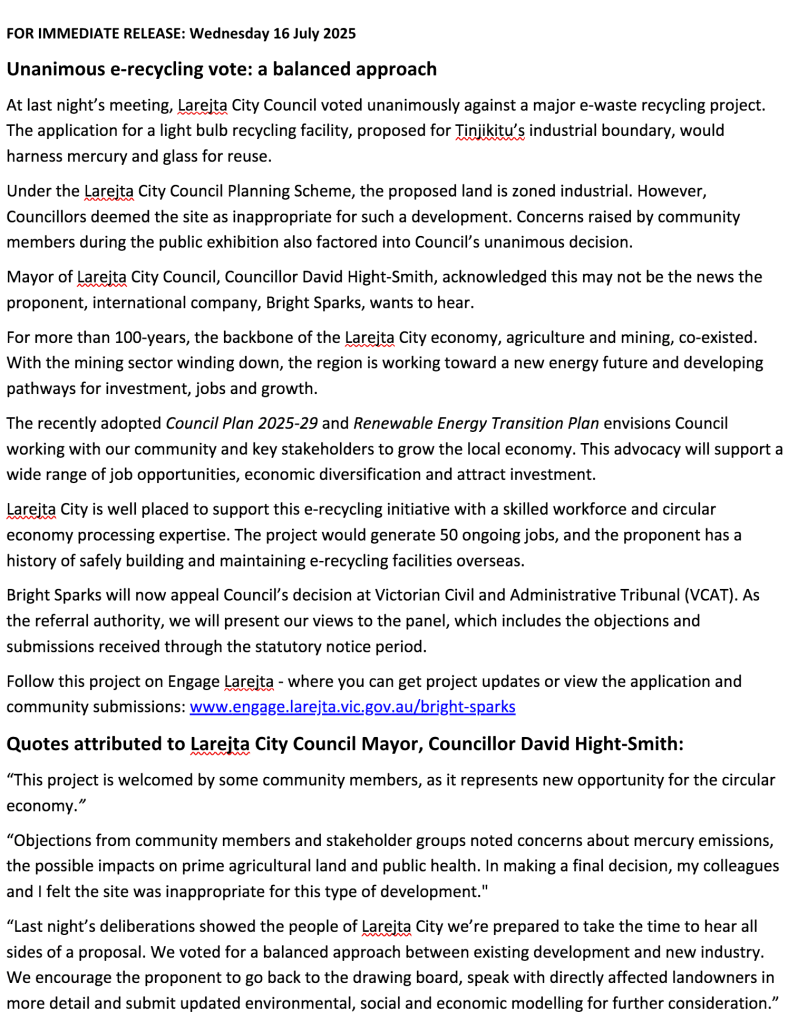
Media Release:
Social Media Engagement Plan:
Over to you… if tasked with this case study, what approach would you take? Share in the comments below.
 merrynpadgett.com
Leave a comment